I recall giving a speech in August of 2008 to about 125 growers and winery owners. The speech was on the economy and I pulled up the slide above to demonstrate what I was seeing ahead of us. This was at a time just after Lehman Brothers collapsed where it had become apparent that we had crested a market high in housing and entering a bearish period. What the chart says in brief, is the historical average ratio of existing home price divided by median 4 family income is 2.8 times. That's what the red line is. With a ratio of 2.8 times, if a family made $100,000 a year, they could afford a $280,000 home. You can see what happened by late 2006 into 2007.
We are taught in school that in economics, measures have a tendency to revert to the mean. But talking heads everywhere were suggesting back then that what we were experiencing was a normal correction. Maybe, but the chart above along with some other indicators told me otherwise and I suggested we were about ready for a nasty correction and reversion back to the mean, and that correction was going to be huge and take years based on the slope of that line.
If that weren't enough, I also suggested the growth rate in wine would fall to flat (zero percent) growth. I really thought there was a strong chance wine sales growth could go into negative territory for the first time in memory - but predicting that would get me permanently banned from the Economic Optimists Union so I fudged up a little on the forecast. I was actually being optimistic on what was ahead for us, but people didn't hear it that way. My speaking invites started falling like the stock market. I've never been invited back to speak in front of that Grower Association again. From all sides the message was, "If you don't have good news to report, then we'll find someone who can." Well, OK then, go ahead and listen to your excessively optimistic speakers and see if I care. My dog still likes me and my mom still ...... well ...... my dog still likes me anyway.
"The housing correction poses the biggest risk to our economy. Our economy and our markets will not recover until the bulk of this housing correction is behind us." Treasury Secretary Henry Paulson, 11/12/2008
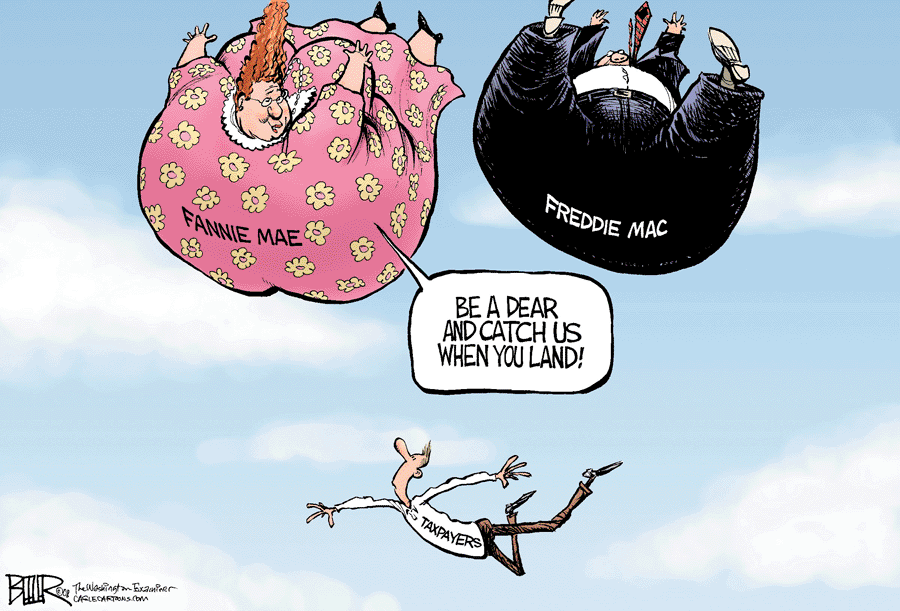
This video was what we saw just months after the speech I made noted above. It was pretty stinking gloomy. The stock market was in the crapper and home prices crashed. With speed never before seen and perhaps treading on Constitutional Authority, the Government and Secretary of the Treasury Hank Paulson started to make investments in the Banks through the TARP program and several other initiatives. Ben Bernanke started to throw money at the financial system and economy. The banking system and Detroit were stabilized. But with the markets dragging bottom and hundreds of billions of dollars being thrown at US industry, the average voter started asking the question, "When do we get a bail out?" The answer came soon enough though most of America missed the memo when Fannie and Freddie were put into conservatorship to protect the US mortgage market from vanishing, causing a free-fall in house prices.
So where are we today? Fannie is actually starting to repay the bailout money (Self serving note: the Bank bailout through TARP was paid back with a sizable profit to tax-payers thanks to the strings Paulson put on that Bailout.) Of course Detroit is now going Bankrupt, but the American Auto Industry was able to rationalize their insane Union compensation plans, and has a chance to pay back a large part of that bailout, if not all of it .... well most of it anyway. The economy isn't healed but the most recent Case-Shiller Index had this happy news last week:
"As of May 2013, average home prices across the United States are back to their spring 2004 levels. Measured from their June/July 2006 peaks, the peak-to-current decline is approximately 24 to 25 percent. The recovery from the March 2012 lows is 16.5 percent for the 20-city index."
Essentially the news is, housing prices are back! In the Bay Area consumers even see an overheated market again with multiple offers and short listing periods. So I was wondering now ...... just where is the recovery in terms of the measures in the chart at the top of this page? My speech back then said that we had to revert to the mean. Paulson said we wouldn't see the economy and markets recover until we had the bulk of the housing correction behind us. Did we get there? The current information out there suggests we have reverted to the mean and are now showing home values at 2.85 times median income. Of course the bad news in that is we will likely see growth in home prices slow now due to investors cashing out and more of the average mortgage payment going to interest, thus reducing the amount of house a person can afford. Being an optimist, we are at least not looking at another bubble. Housing growth will take place as median incomes rise.
Consumer Comfort Index at 5 year high
Don't get me wrong. There is a lot to do still to heal housing and the mortgage business. Banks aren't able to make home loans anymore and sell them as packaged securities. Prior to the crash, that was half of all new bank lending. Now it's 0%. Banks now have to keep the loans on their books or sell them to Fannie or Freddie for the present. While its nice to know they are starting to turn the corner, last week President Obamaoutlined plans for the wind-down of the Governments involvement in those institutions. Having just gone through qualifying for a home loan, I can tell you first hand that the mortgage business is dramatically different than it was.
In the SVB State of the Wine Industry Report released in January, we predicted bumpy going in the first half of the year and an upturn in the back half with average fine wine sales growth in the 4% - 8% range. While there are still plenty of variables out there that can throw that forecast off, I think at this stage with the good news in housing and retail sales hanging in still, its remains a good forecast.
The middle class consumer is showing resilience, housing is now below 6 months of inventory which typically signals a short market, and the Fed is talking about ways to slow their bond purchases in response to what seems like a healing economy. We have a lot to look forward to in the last half of the year, and I'm hoping my pre-recession gloomy speeches will be forgiven by the organizers in hindsight, and maybe my phone will ring again since I have happy news to report? Oh well ..... at least my dog loves me.
What do you think? Where is the last half of the year headed? Are we going to hit my sales forecast for fine wine this year? What about the mortgage and housing markets? Are they going to stall or improve? There are lots of moving parts but please log in and offer your perspective for the community.
Everyone likes Fridays. This Friday is a little more special so I decided to post a non-Sunday blog for the first time. Why the deviation? Because Friday is the day we receive the most hours of sunlight in 24 hours .... and then its all downhill after that.
While that sounds a little gloomy phrased up that way, consider that its coming from someone who has been following and predicting the movements in the economy and wine business the past few years. Its been enough to make anyone gloomy especially since I've been consistently right. (Editors note: Please don't wake me and remind me of a forecast that was wrong. Thank you.)
Anyway, something happened yesterday that is making me put on economic sunglasses to protect my eyes: The Fed announced the economy is looking pretty darned good, inflation is in check, and unemployment is coming down to manageable levels. Add to that the US Credit Rating was raised back to AAA about 10 days ago and that is down right exciting right? What did the markets do? The Dow dropped 200+ points and the 10 year Treasury Bill rose 13 basis points. In fact the 10 year, which is the benchmark used for vineyard and acquisition financing has increased about 40 basis points since May. So what gives? If this is good news why is the market off and what does that mean for the wine business?
In conjunction with the other good news, the Fed announced they were going to pull the monetary sucker out of the Market's mouth of the toddler-like economic recovery, and targeted an end to their Quantitative Easing program starting early in 2014 and ending mid-year. The market has been feasting on cheap money for a long time and the announcement and timing was just a little more firm than many suspected, putting a damper on the investors mood.
Along with the announcement, the US dollar strengthened because there is now a higher return realized from investing in US$. In addition, the dollar also gained strength because the announcement demonstrated the US is not like Japan and won't be forever in a weak growth environment. A stronger dollar will mean we should see cheaper imports and that's a risk in a business that is running at balance to short in grapes and juice.
The announcement also signals an end to a cycle that has led to the lowest rates in the history of the US, and created a refinance stampede from wineries and vineyards in the past couple years. While the short term rates are for the present still low, the long end of the yield curve is trending up as noted to the left, and rates should continue to go higher based on this announcement. At some point in the next 24 months, it appears we are likely to see the short end of the rate curve start to rise as well.
Higher long term interest rates normally mean stabilized land values as higher interest costs mean larger property payments and a property can only produce so much in the way of cash flow so that lowers the sales price of land. In the case of vineyards, that may or may not prove out because the supply of vineyards is also lowish, and there has been a rush by many in the business to acquire new producing vineyards to support their programs driving land values higher. If this signals higher consumption levels, wineries will be looking for even more land. That's a long discussion and will have to wait for another Sunday.
The good news in all of this is the US Consumer is indeed making headway coming back and our economy is leading the World in showing recovery. Employed and confident consumers buy more wine, and higher priced wine. Higher bottle pricing will be needed if the wineries are going to be able to pass on the higher price of grapes that growers have been taking during the first half of this year. Consumers aren't quite there yet in being willing to spend more on wine but hopefully we will see that soon. That too is a blog post for another day.
Bottom line is the consumer is coming back so we might start spending our way back to prosperity .... which has always amused me ... that we can eat our way to prosperity, consume the worlds goods and be the envy of most other countries in the process. Doesn't that seem unnatural in some economic Darwinian way? Back on point, this announcement signals rate increases will be coming. A 6% prime rate isn't that unusual. What happens to your winery's profitability if we see short term rates go up 3.00% in the next couple years at the same time consumers demand is growing and imports are cheaper?
Hopefully you've already locked in your capital and rate structure and got your piece of the cheap long term real estate money Ben Bernanke has been handing out, so your business wont be subject to a cycle of growth financed by higher priced debt in a margin strained wine industry.
Its a lot to digest and this barely touches the subject on the business and the changes we are going to see in this next cycle. For now I'd suggest you enjoy Friday because its all down hill after that ........... ( I'm talking about the hours of sunlight of course .....)
What do you think about the Feds announcement? Please sign in and offer your thoughts.
Selling commodities is difficult because people buy on emotion, or instinct if you will. Want and desire are powerful emotions that can stimulate the release of endorphins. It's why some people are shop-a-holics. It feels good to buy. But it's not that easy to get emotionally worked up about borax, chlorine, and salt. As an economic good, a commodity has no real differentiation, so small price differences in competing products can make huge differences in total sales.
Think about how you won't buy gasoline at one gas station because it's four cents cheaper around the corner. That's a commodity. Ever buy a piece of art that way? Of course not because art's value is in the eye of the beholder, is easily differentiated, and consequently will have wide price ranges. When art is sold, it's sold on the artist's reputation or the emotion the piece evokes for someone. Marketers work overtime to take commodity-like goods and then pretend they aren't commodities by creating and building an emotional appeal around the brand.
Take the above deodorant commercial. Did you hear mention of the product characteristics as a differentiator? Nowhere does this commercial say Old Spice is made with orange, lemon, clary sage, heliotrope, pimento berry and musk,even though those were the original Old Spice ingredients. The creative team instead focused on delivering an emotional image; something with a human connection that ties back to the product.
In this case in a humorous way, they are talking about sex-appeal and are really targeting women who are by far the larger purchasers of family groceries still. The subliminal note is if you get Old Spice for your husband, he will look like this ........ or maybe the message is he will ride a horse? I don't know but I am wearing Old Spice and on a horse right now. Look at me....
Anyway ..... can't you just envision someone describing wine with "subtle notes of clary sage layered with heliotrope and pimento berry?" You can find thousands of examples of that kind of marketing in wine. But if professional marketers push emotional connections and ignore or make secondary the product characteristics, why should we market luxury goods that way? I think the answer to that question is most wineries don't really think about brand building. They think about selling wine and are locked into a habit that predated varietal marketing; a time when consumers couldn't already tell you what chardonnay tasted like.
Why do wine producers still insist on talking about who their family is, or how the warm sunny days, cool nights, special soils, with subtle notes of <fill in the blank with any obscure aroma> makes their wine special? Is that approach creating an emotional lift? Are you feeling any endorphins flowing? Is that building your brand? I've seen no research to suggest that kind of marketing even tips a purchase decision. More likely it's going to be color, appellation, scarcity (ego) or a feeling and/or familiarity for the brand.
How outdated is that kind of marketing? When I hear someone taking the "notes-and-hints-of..." approach, I have a distinct emotional response. I think of Thurston Howell III, jaw protruding wearing an ascot and a club emblazoned jacket. <......you have to say this in your best East Coast boarding school accent...> "Oh Lovey! Isn't it the cocktail hour? Will we be dressing tonight? ..... No? Oh .... then just bring me a glass of anything, as long as it has a note of ollieberry." (Editor's note: How many consumers can even describe the characteristics of ollieberries?) Does it make sense to sell anything these days if the potential emotional response is equivalent to the consumers view of Wall Street vs. Main Street? It's an emotional connection for sure, but is it the connection you want to set for your brand? Stuffiness does not sell wine, although exclusivity and mystery can help a brand if properly approached.
Your brand has to be focused on delivering an emotional image to your consumer. If you can't easily describe the emotional connection you are trying to present your consumer, if your marketing isn't aligned behind that concept, if you struggle with coming up with any emotional connection your brand creates, it's a good time to stop and re-think what you are doing. Your brand has to be more than the wine itself.
What do you think? Can wine be sold on the product characteristics? How are you creating an emotional connection to your production with the consumer? Please log in below and offer your insights into this topic and share your thoughts with the community.
Our most popular post from last year is brought current with the 2012 financial information. The question at hand is: "How much do wineries really make?
The answer of course is ......(drum roll please ....) Not enough. Finding the facts is almost as hard as chasing unicorns in this business because the wine business is private. Its a family owned industry with even the largest; Gallo a family owned company. But its really quite amazing from the perspective of what is shared between neighbors in the wine business. There isn't the sense that your neighbor is a rival or competitor. Its more of a club feel in many ways. If you need something, its quite normal to check in with your neighbor. Need a tractor because yours went kerput? No problemo. Need a little welding and custom fabrication on a pump? I'll be right over with a welding rig.
There is a competitive side that abounds in the business too of course. When it comes to sharing financial information and customer lists, good luck! Ask a winemaker neighbor how its going financially, and you'll get a mixture of liars dice, false bravado, partial truths and ..... well ..... the following video is the best explanation of how that game is played.......
It's no wonder our winery and vineyard clients at Silicon Valley Bank are drawn to our Benchmarking Database. Its not a guess or inflated bravado. The data in the set are composed of thousands of reviewed and audited financial statements and they go back to 1990. We can group peers by region, varietals produced, business model and many other factors. You might be able to fool your neighbor on your cost of goods sold per case, or make a little white lie on your growth rate last year but as a banker, we get the real information so we are a little harder to fool. Our clients get free access to the averages and information produced, so they benefit by sharing. That kind of data doesn't exist anywhere else.
So back to the title question: How much do wineries really make? 6.9% pretax at the 2012 year end. That's a lot less than dreamy consumers imagine.
This chart is one that I present each year in the State of the Industry Report and use in most of my speeches. (You can see a larger view with by clicking on it.) Its a summation of the financial performance of the wine business since the 2004 calendar year. The tan-ish bars represent gross margin (sales minus the cost of sales), and the darker line is pretax profit. The lighter line is industry sales growth. You can back into total operating expenses as an expense if you are interested, by adding pretax profit and gross margin, and subtracting the sum from 100%.
What you notice from the chart is gross margin is far from consistent. Even if grape sales were constant, trade discounts and pricing opportunity will vary year to year changing the gross margin. But the reality is purchased grapes run through cycles and estate wineries have higher and lower costs of goods based on farming costs and yield. As you can see though, gross margin and then profit do move in waves.
What's happening right now? We are seeing producers starting into an era in which their gross margins are and will be squeezed. You can see the impact of price discounts from 2007 to 2009 where we found bottom out of the recession. Then in 2010 and 2011 we saw improved conditions as grape costs fell off their pre-crash levels and . Today we are experiencing the higher costs of light yields in 2010 and 2011 which in 2012 were offset by reigning in promotions and discounts.
In 2013, we will start to see the higher grape costs from 2012 entering the income statements. Those costs aren't fully passed on to the consumer which means those pre-tax profit margins you see are likely to fall a bit in the next several years, at least on average.
There will always be some neighbors who do better than others. I'll bet our imaginary neighbor didn't know what was happening with the industry benchmarks .... or did he?
This is the appropriate time to add .... the preceding "film" contains statements and opinions which are fictional in nature. Any similarities to real people or wineries are purely coincidental and unintentional. And besides, no winery owner I know would be caught dead in that red sweatsuit looking like they were wearing a diaper. I've never met anyone like that.
Anyway - those are the facts on winery profitability and the bottom line. Wineries are being squeezed and in our opinion are likely to see more of that in the near term being unable to pass pricing increases to consumers. Economically, we may start to see improvement in the back half of 2013 and that may help somewhat.
Those are our thoughts. Feel free to weigh-in and offer your thoughts and comments below.
The vines flowering this time of year remind me of seventh grade. Maybe its the Aqua-Net hairspray smell the flowers produce but that's when we had our first crack at dancing after school which made institutionally official, our life-long quest to read the minds of the opposite sex. Filing into the sour milk scented cafeteria one sweltering afternoon, the boys took up their station on one wall while the girls occupied the opposite wall. The girls giggled and pointed at us prepubescent pimply-faced males while we in turn stared blankly back across the barren dance floor. "ABC. It's easy as 1-2-3" from The Jackson 5 cranked at volume eleven in the background, so we started to move to the music right where we stood thus signaling in our Cro-Magnon genetic way that we could dance. Well, we could if we wanted to. We just didn't want to. The girls of course had been practicing their dance moves since 3rd grade in front of their full-length closet mirrors. Us boys? We were playing baseball, football, kick-the-can, capture the flag, and tiddlywinks, oblivious to girls - unless you count the observation of cooties. ======================= If you want to skip my meandering memories from 12 year olds first dance experience, you can skip down To The Point Now. =======================
Half the Battle is Mental
Standing there with the weight of expectation hanging heavily in the air; those expectations based on the boys leadership, we stood clueless with results likely to meet our poor mental preparation. You see back in the day, boys were the ones that had to ask girls to dance. A girl who asked a boy to dance would be considered a floozie. So growing uncomfortable by the minute with an empty dance floor and rising to the challenge, we each used what we had in our arsenals to solve the problem: our competitive instincts and ability to formulate a plan. We just needed one song we had heard before with a recognizable beat, and we could fake this dancing thing.
We surveyed the other wall for just the right bubblegum smacking female; someone who wasn't too popular or foxy who might decline our invitation, or too unpopular or doggish because you would catch grief from your pals dancing with her, someone at least glancing your way from across the room on occasion signaling a possible positive outcome.
Then the time came. The perfect song would start to play. This was it. You were ready. Now or never. Steeling up our nerves, we started across the empty floor wobbly-legged on a mission feigning some degree of confidence and most importantly looking at the ground, never once looking directly at the girl of your intentions or walking in a direct path toward her lest someone think you actually liked her.
Executing the Plan
In the other side's bivouac, huddled in a close knit circle the girls shouted into each others ears to be heard over the music, all the while pretending they didn't notice a boy flanking their closed group. Then with heart pounding, you saw the feet of girls knowing you had arrived at the target location. Reaching up, you tapped the girl on the shoulder and were greeted with an unpracticed look of surprise. "Oh! ...ugh.... Hi?" Eyes looking up into hers now locked in anticipation of the question, you suddenly come to grips with a massive error in judgment. The girls all looked smaller from across the room! Your eyes were right about the level of her ...um ..... her chest. Turning around and retreating would be an embarrassing option which would be seen as weakness by both sides. You had to move forward with the plan, so the words ebbed forth like molasses trickling from your dry mouth, "Hey! Ugh ...you .. a ... ughhh.... You want to dance?" Leaning forward and down, she screamed back into your ear the most blessed word known by man; "Yes."
Things Not Going to Plan: Adaptation Rules the Day.
You were the man! With your spirits soaring and in charge now, you grab her sweaty palm and tow her to the center of the room. Then, just as you start to assume your pre-imagined, partially squatting dance position, elbows bent, fists clenched, forearms parallel with the floor, and thumbs up in the air ........ the song suddenly ends. Oh crap! A second error in judgment. You took too long to strategize, slowly walk in feigned confidence, and then stumbled on your words. You missed the song that you maybe could dance to.
Now with the room in silence except for the buzz of gossip coming from the walls, a bead of sweat trickles down your temple. Adaptation is required. Entirely off the plan now, luck intervened when the girl said, "Let's just do the next song...if you want."
Relieved but apprehensive as the scratchy sounds of the needle are heard seeking the groove on the next 45, you tilt your head down and sideways to hear the beat of the new song, your nose unintentionally directed toward your armpit. You realize that you smell like you haven't showered in a week, even if you did shower last week. And then the roof collapses on you as you hear strings. It can't be but ....... OH MY GAWD! It's a slow song!
You both stare at each other wide-eyed in fear. You are both going to have to go through with it and hold each other. Cautiously you place your hands on her hips while she reaches out to rest her elbows on your shoulders. Staring into her eyes, you try a couple moves and the next thing you know your face comes in contact with her .... um .... her chest, and she's actually wearing a bra! She's no girl! She's a woman and you are touching her! For the first time in your life, you really wished you'd showered and listened to your sister when she said you needed deodorant.
Well that's what someone told me happened back then. That never happened to me of course but it does remind me of the dance that starts about this time of year on crop size and grape price.
To The Point Now
This is the point in the year when growers line up on one side of the dance and talk about how small the crop is going to be so price is going to have to go up. On the other side of the room are the producers who talk about how big the crop will be and steel their nerves and make decisions about their needs for harvest. Should we lock in now or wait until we hear the song start at harvest? Will price go up or can I take advantage of a big year and get some low-priced juice?
Talking to one of my readers and winery clients this past week, I heard something for the second time this spring: Early estimates of crop size portend another large crop. While not impossible, to think that we will get another record year like last year - back to back ... it would be about as unusual as a girl agreeing to dance with me in the seventh grade.
Before we can really get a handle on what might happen to price, you first have to have an idea of what is happening with producers and their supply to determine their appetite for grapes. Are they selling their wine?
In the SVB Wine Industry Report released in January, we predicted the year was going to start off slow from the perspective of GDP. Growth trends in wine sales had been dropping for 3 years running and the Fiscal Cliff wasn't making the investment environment any less risky. We predicted getting pricing increases early in the year would be difficult and we said the second half of 2013 should see improving trends as the economy benefited from the middle class joining in the recovery.
We're we right? Early returns on wine sales this year demonstrate that the first quarter was slightly better than we'd guessed and sales growth was tepid but positive. The economy is doing slightly better than expected too and pricing increases have been taken in modest amounts, reflected more by reductions in promotional allowances. From that we can intuit, as we predicted there is only limited pricing power in the hands of producers so supply is at least in balance and not long.
Steve Fredricks, Turrentine Brokerage
Talking Friday to a wine broker who will go unnamed, I got a few pieces to the puzzle regarding bulk supplies. I'm told that the juice that's been sitting in tanks from the large harvest has been moving along at a steady pace. Asking his view of expected harvest yields, he offered the view that I share as well at this stage: no matter how many clusters per shoot people see, it really is just too early to extrapolate anything from that.
Last year there were fewer clusters than people are seeing today and we still ended up with a record harvest. To get there, we needed perfect conditions through the entire season in all appellations. This season we are three to four weeks ahead of normal due to a warm spring and lack of rain. Conditions could be perfect, and then again we might get a rain in July. Last year we were also coming off some weak harvests and needed crop, so farmers tried to hang more tonnage. This year coming off a large crop, farmers who farm for above average volume could be in for a surprise at harvest if yield comes in as large as last year. Farmers should be hedging their bets this year with that knowledge and only look at specific varietals like chardonnay and high-value cabernet as places more likely to find spot buyers. From the perspective of this unnamed broker and my opinion as well, anyone betting on a second massive crop while possible, is making a bad bet.
Coming Together
Managing grape supply is like the dance. Growers and wineries line up on opposite walls and try to read the minds of each other in addition to the consumer, but all send mixed and lagging messages.
Half the battle is mental. You need a plan. The plan should include measures of long term control of your most important grape supplies, and those should be intertwined with a strategy that hedges the lengths of grower contracts so they don't expire at the same time and thus create wide variability in your inventory cost.
You want to be an important partner. Surveying the other wall, don't get into a place where you are a minor player and more easily declined when market conditions change. Growers want a balance in customers as well. They don't want a scillion people running through their vineyards trying to control cultural practices by row.
Execute in a defined way on the grape plan and don't be prone to following the gossip coming from the walls. Talk to people without a bias who have supply and pricing knowledge like unnamed grape brokers, or maybe your favorite wine banker who's in therapy still over his seventh grade dance experiences.
Be prepared when plans go awry. When the music stops suddenly and your plan is crushed, do you have a backup strategy? Where can you get more grapes and where do you have relationships that allow you to adjust a contract if necessary? In any business but particularly the wine business, make sure you have the capital and a banking relationship that allows you to survive those unexpected changes. Especially today if you are struggling even a little with cash flow in this interest rate environment, think about the level of debt you possess and what that interest expense will look like with normalized rates. Short-term rates are going to increase in the next 18 months.
Finally be creative and remain positive. Some of the best marketing plans and products were developed when the plan didn't pan out. So when you end up with lemons, figure out creative solutions to adjust. We talk to our clients constantly about creative options. Its what we do for a living. Recognize even when you get stuck dancing with someone who has their chest in your face, there are always positives behind every dark cloud.
Sorry for the long post. I hope it was at least entertaining. It was theraputic for me.
What do you think?
Where will the harvest come in with yield this year?
What are early indications in your AVA with crop?
Are you seeing additional plantings to support growing demand?
What is happening to the price of grapes in your market?
How are sales of bulk wine? Can you find what you need at the right price?
Sign in below and share your insights with the community.


 We are taught in school that in economics, measures have a tendency to revert to the mean. But talking heads everywhere were suggesting back then that what we were experiencing was a normal correction. Maybe, but the chart above along with some other indicators told me otherwise and I suggested we were about ready for a nasty correction and reversion back to the mean, and that correction was going to be huge and take years based on the slope of that line.
 If that weren't enough, I also suggested the growth rate in wine would fall to flat (zero percent) growth. I really thought there was a strong chance wine sales growth could go into negative territory for the first time in memory - but predicting that would get me permanently banned from the Economic Optimists Union so I fudged up a little on the forecast. I was actually being optimistic on what was ahead for us, but people didn't hear it that way. My speaking invites started falling like the stock market. I've never been invited back to speak in front of that Grower Association again. From all sides the message was, "If you don't have good news to report, then we'll find someone who can." Well, OK then, go ahead and listen to your excessively optimistic speakers and see if I care. My dog still likes me and my mom still ...... well ...... my dog still likes me anyway.

 So where are we today? Fannie is actually starting to repay the bailout money (Self serving note: the Bank bailout through TARP was paid back with a sizable profit to tax-payers thanks to the strings Paulson put on that Bailout.) Of course Detroit is now going Bankrupt, but the American Auto Industry was able to rationalize their insane Union compensation plans, and has a chance to pay back a large part of that bailout, if not all of it .... well most of it anyway. The economy isn't healed but the most recent Case-Shiller Index had this happy news last week: