
 The business world moves in cycles, and if you live long enough you start to see them repeat. Today the popular press is replete with articles hyping the Urban Millennial Myth.
Its the older tradition-loving Boomers who have become accustomed to Madison Avenue solving every need, want and desire - versus the edgy up-and-coming Next Generation. The Next-Gen is nothing like you've seen before and you need to get current with your marketing or you will end up on the losing end of the stick.... or so many would have you believe ... except its really a repeat of a cycle we've seen before and we can see the outcome.
Cycles & Susan B. Anthony
Boomers today drive wine sales and its the women Boomers who are the primary wine buyers according to many studies. Those were the the same bra-burning feminists that were labeled as radicals back in the 1960's and early 1970's when they were Millennials. They were nothing like we've ever seen before either .... well .... there was Susan B. Anthony in a prior cycle but that's another story.

An article that came out last week says Millennials are looking for non-pretentious products, non-traditional packaging, simple wines at an affordable price that speak to them; each are reported solutions for cracking the Millennial Code and developing a successful wine marketing program to that untapped pot of gold at the end of the cohort marketing rainbow.
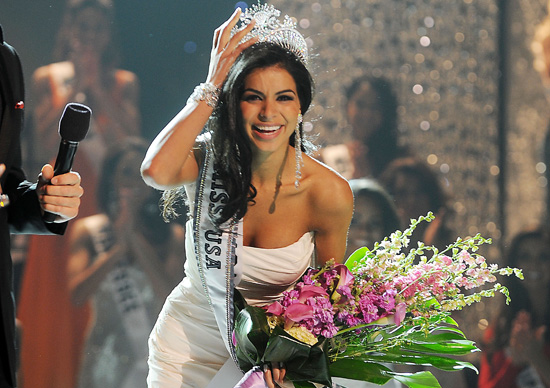 |
| Rima Fakih (Photo courtesy of Miss Michigan USA) |
"...flout the bureaucratic rules that dictate how wine should be made. It’s an eclectic, slightly subversive list with a decidedly anti-authoritarian bent."The description of Millennials and what they like sound eerily familiar ... non-traditional packaging, simple wines at an affordable price.... transparency, authenticity, adventure, irreverent behavior.....
Boom-illenials
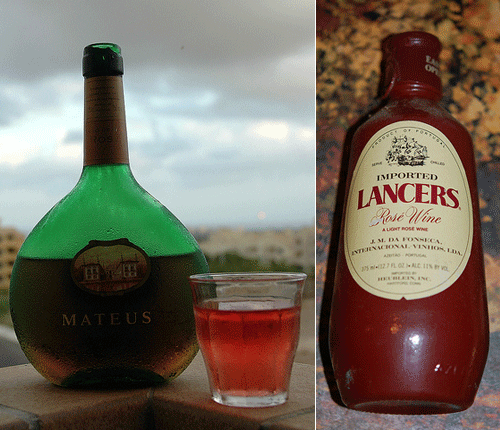 Back to cycles - there was a day when the Boomers weren't traditionalists either. In the 1960's we Boomers wanted transparency... except we called it Government lies. We wanted authenticity ... except we called it "getting real." We leaned toward being irreverent, and were called radicals. We were part of the Occupy Movement ... except we called the event a "sit-in." And we also drank wine - mostly inexpensive sweet wines; Blue Nun, Reunite (on ice ...), Grey Riesling, Mateus, Lancers, Rhineskeller, Paul Mason wine in carafe's, etc.
 Those brands were the wine companies solutions for marketing to the Boomers in that era .... wines from non-traditional regions and presented in non-traditional packages, emphasizing fun, adventure, and sex appeal. We were really anti-authoritarian, sustainably-green. Heck, we even recycled the Lancers bottles as candle holders! Millennial current day likes and dislikes are very similar to what came before them so there is a road map and we are seeing the same thing happening with the growth in Rieslings as an example, and the multitude of packaging.
Radical Feminism and Wine
 Maybe Susan B Anthony didn't let liquor touch her lips, but Boomer women have been found in several studies to let a lot of wine touch their lips, and and one can argue women Boomers are the most important wine cohort today. In one study, The Wine Market Council recently estimated 53% of people who drink wine more than once a week are women. Maybe someone should have marketed to them back in the 60's? Radical feminists as they were called in the 1960's, brought attention to their second-class plight by casting their makeup, high heels, girdles and bras into trash cans labeled "Freedom Trash Can" at the 1968 Miss America Pageant. In a decidedly anti-authoritarian manner, everything was tossed into the can and it was set afire.
  Gloria Steinem is one of the best known feminists. She was at the epicenter of women who were burning their bras at the Miss America Pageant and working for positive change for women in our culture. Where did she end up? She's spent her life trying to advance the cause of women, but she's mellowed and become less radical and more traditional today. When she was recently asked to opine on Miley Cyrus vulgar dance (!generation gap alert!) at the VMA awards, this was her response:
  |
| Gloria Steinem |
".... given the game as it exists, women make decisions. For instance, the Miss America contest is in all of its states ... the single greatest source of scholarship money for women in the United States. If a contest based only on appearance was the single greatest source of scholarship money for men, we would be saying, "This is why China wins." You know? It’s ridiculous. But that’s the way the culture is. I think that we need to change the culture, not blame the people that are playing the only game that exists." (highlighted for emphasis)
Wow! That's a huge evolution for Gloria Steinem. Not only did she not condemn the Miss America Pageant, she applauded the contestants for doing what they could do. Apparently, even the most radical among us will evolve over time.
Should I Market To Millennials Now?
 Looking at how Gloria Steinem has evolved, do you think a brand created for her in the 1960's would still be effective today? I've heard the argument from many that its important to market wine to Millennials now, so they will be the next generation of wine drinkers. If you make $10-$20 wines as a mainstay, then by all means - market to Millennials because they might buy your wine today. But if you are making wines that are $20+ wines, then you are wasting your scarce marketing dollars.
 All that said, if we want to have Millennials learn to love American wines when they are in their thirties, that is an American Wine Industry issue. No question in my mind that the younger generation has access to and is drinking better foreign wine than the Boomers at a similar point in life. That should be a concern to the US wine industry and we should be looking at putting a Wine Marketing Order in place.
 Take a clue from history. Were you to make a wine that appealed to the 60's Bra-Burning Radical Boomer Feminists when they were in their early 20's .... brands like Blue Nun, Grey Riesling, Mateus, Lancers, Rhineskeller, Reunite, Paul Mason wine in carafe's, etc. .... your branding would have been wasted just like those brands have wasted away to being gone or almost gone. The women who consumed those wines back then today really don't drink those wines. In the same way, there is little chance that the Millennial will develop loyalty to your brand that hits all their wants and desires now, and who stays with your brand forever because you were first to their party. Why? Because their tastes will change and when they have the money to make impactful purchases of your $20+ wine, they will be off to something else. History will repeat itself.
 Millennials Are Last in Wine Spending
 In the article I mentioned above, we sadly find the seemingly requisite and misleading stats that overstate the Millennials importance in current wine consumption, contributing to the growing urban myth by saying,
 Urban Myths and Women
 I challenge anyone to find a reliable statistic that shows Millennials are spending more on wine than Boomers or Gen X'ers today. If you believe that to be true, then you've been sucked in by the Urban Myth of Millennials..... just like the myth of women burning their bra's in the 1968 Miss America Pageant. True story .... that never happened either. Nobody burned their bras at the Pageant and it was rare that anyone ever did. Its just another urban myth that keeps getting repeated over and over again until it starts being true, exactly like the Millennial Myth that is advanced into urban legend by self serving reports and reporters. The reality is that what you read in the press (and stupid blogs for that matter) ... what's written isn't always true. Deciphering the truth can at times be perplexing, but from every angle available - what is clear to me is Millennials will evolve just like the Boomer women evolved, moving from gimmick wines and unique packaging, to more structured wines, and then to fine wine. Of course that's a generalization and you can just as easily argue not all will evolve that way and I would agree. For now though, Millennials shouldn't be the targets of most family winery marketing programs today. Gen X should be your growth engine and Boomers should be your "cash cow."
  The Feminism Movement made enormous strides for women's rights but with wine, there is more work to be done. In an article three years ago, a Master Sommelier pointed out 80% of the time a male/female couple sits at a table together, its still the man who is given the wine list and expected to make the decision. I'm thinking women deserve an equal chance to grab the list and suggest the practice of putting the list in the middle of the table makes the most sense.
And finally to Gloria Steinem, turns out she is a Boomer and a wine lover - go figure. If you are interested, and are planning on being in New York on December 23rd, you can see her at the City Winery with the musical group BETTY and ask her what she thinks.


